





FIELD GUIDE 03 / Make a better choice
Belt, chain or wall mount? Start with the space you live in.
Compare belt-drive, chain-drive and wall-mounted garage door openers by noise, ceiling space and compatibility, with a practical buying checklist.
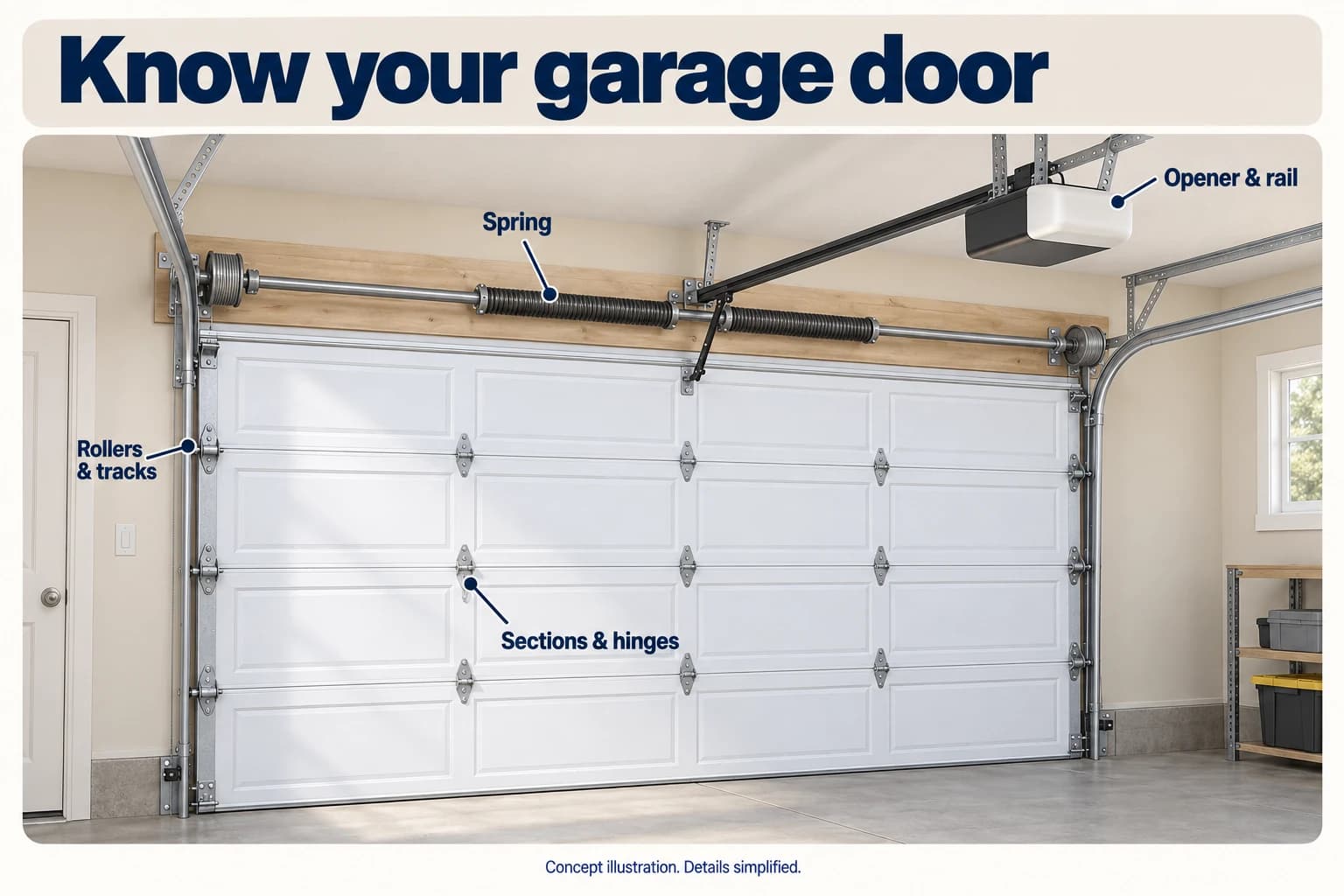
Choosing an opener is easier when you start with a few facts about your garage. Is there a bedroom overhead? Is the center of the ceiling needed for another use? What type of door and spring system is installed? Belt, chain and wall-mounted designs make different tradeoffs, and the exact model matters more than a broad category label.
Choose a compatible opener around your priorities: sound, ceiling space and the door you already have.
A CLOSER LOOK
What matters most in your garage?
Open the situation closest to yours for a starting point. These are comparison prompts, not a compatibility verdict.
01There is a bedroom above the garage
Put a quiet belt-drive model on your comparison list. LiftMaster also highlights wall-mounted DC designs for reducing vibration. Ask about the complete door system: worn hardware can still make noise after an opener upgrade.
References: LiftMaster — quiet garage door openers · Genie — belt, screw and chain drive differences
02I want the center of the ceiling clear
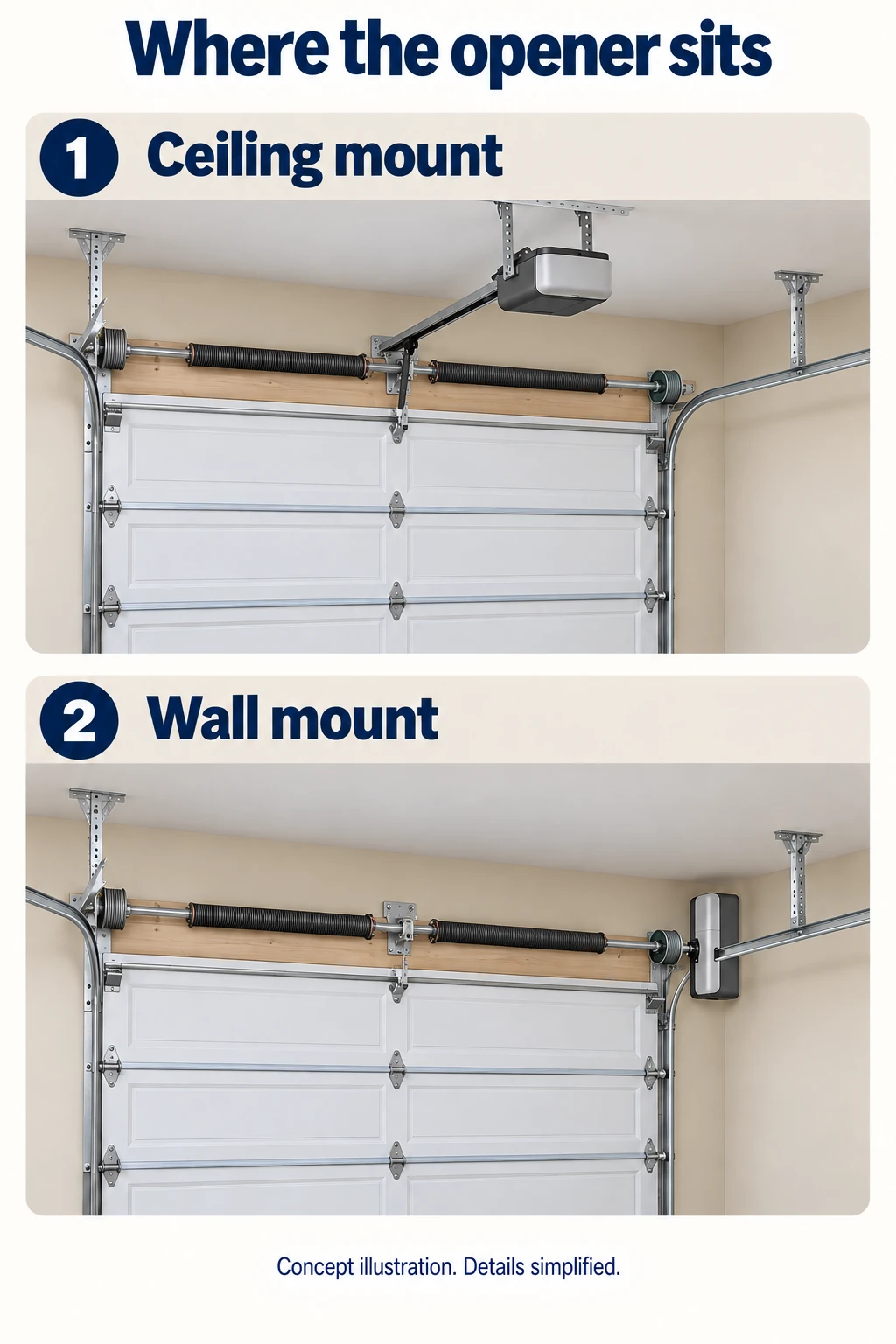
A compatible wall-mounted opener can remove the central opener rail. The door's own tracks remain. Have the installer verify the spring-shaft arrangement, clearances, door limits and electrical location for the exact model.
References: Genie 6072 — wall-mount arrangement and requirements
03I want to compare straightforward replacements
Include both chain and belt models in a like-for-like quote. Keep the installed scope, controls, backup power and manufacturer coverage consistent so a headline price does not conceal different packages.
References: Genie — belt, screw and chain drive differences · Genie — opener compatibility and required hardware
The drive type is only one part of the choice
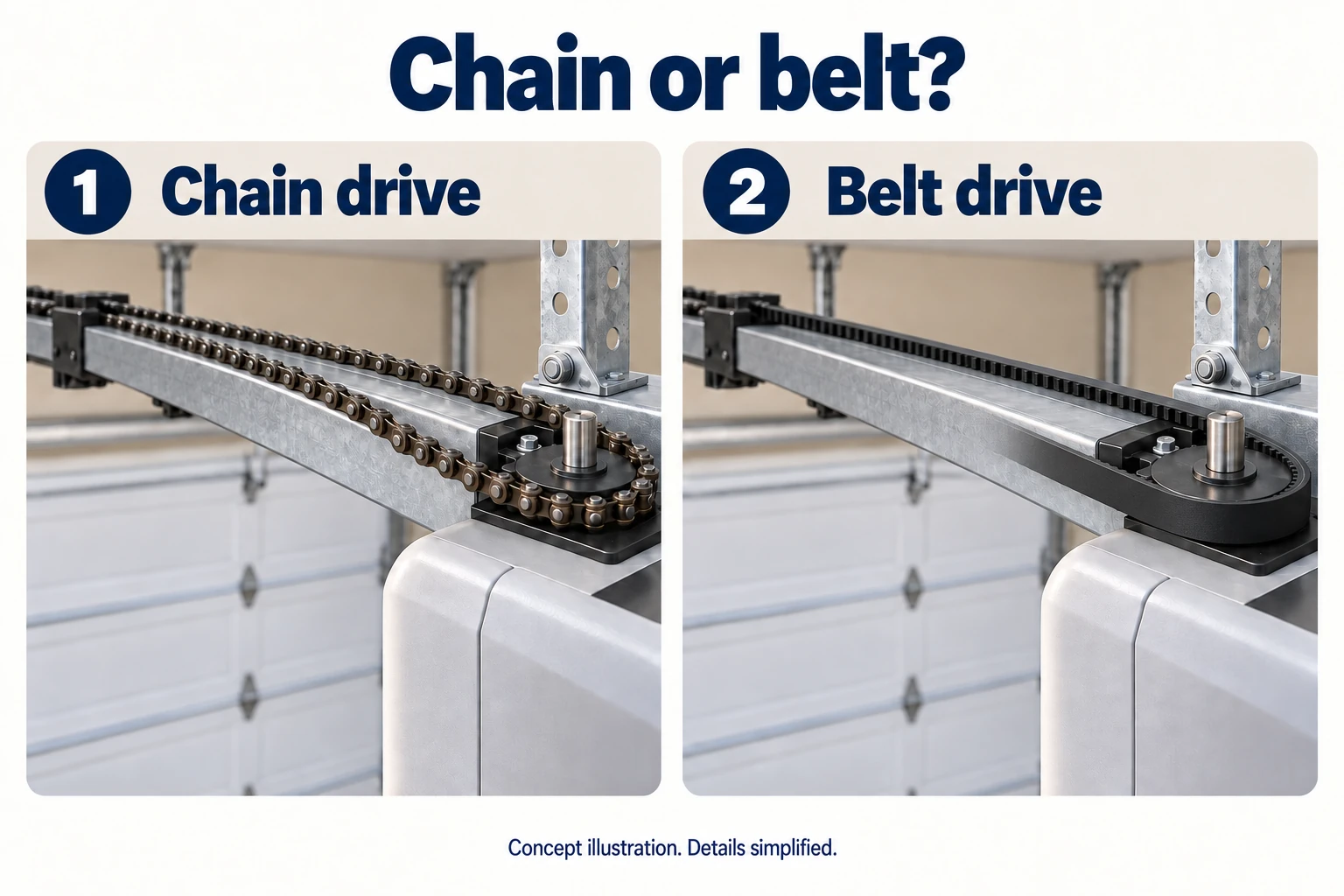
A chain drive uses a metal chain; a belt drive uses a reinforced belt to move the carriage along the opener rail. Genie describes belt systems as a quieter option while also offering chain-driven systems. Compare the complete model, rather than assuming every opener in one category behaves identically.
For a noise-sensitive room, ask the supplier to explain both the motor and mounting arrangement. A product described as quiet does not mean that the door's rollers, hinges and other hardware will be silent.
References: Genie — belt, screw and chain drive differences · LiftMaster — quiet garage door openers
Wall mount saves a particular kind of space
A wall-mounted opener sits beside the door's spring shaft instead of using a motor and rail in the center of the ceiling. That can free the central overhead area, but it does not remove the garage door's tracks or its travel path.
Compatibility is model-specific. Genie's 6072, for example, specifies door-type restrictions, side and overhead clearances, door limits and an outlet location. Those specifications illustrate why an installer should inspect the opening before you choose this arrangement; they are not universal dimensions for every wall-mounted opener.
References: Genie 6072 — wall-mount arrangement and requirements
Ask for the complete installed package
Our suggested comparison sheet has one row per model and the same columns for each: installed scope, required door hardware, controls, lighting, backup power, connected features and manufacturer coverage. Mark anything that is optional rather than included.
Keep a photo of the existing model label if it is safely accessible. Let the installer identify the door construction and any required reinforcement or connection hardware. Genie specifically advises checking the door manufacturer's requirements because some doors need particular hardware.
References: Genie — opener compatibility and required hardware
TAKE THIS WITH YOU
Before choosing the model
- Describe your noise priority and any occupied room above the garage.
- Ask for a check of the door and spring system before an opener recommendation.
- Confirm exact-model compatibility and all required connection hardware.
- List included controls, lighting, backup power and connected features.
- Compare the total installed scope and manufacturer coverage, not just the motor unit.
Sources & illustration notes
Manufacturer and industry references checked September 9, 2026. The explanations and comparison checklists are editorial guidance, not a product test or an inspection of your door.
- Genie — belt, screw and chain drive differences ↗
- LiftMaster — quiet garage door openers ↗
- Genie 6072 — wall-mount arrangement and requirements ↗
- Genie — opener compatibility and required hardware ↗
The original artwork was generated with AI for this guide. It illustrates concepts and omits or simplifies hardware. It is not a photograph of an Anderson installation or a model-specific service diagram.
KEEP EXPLORING