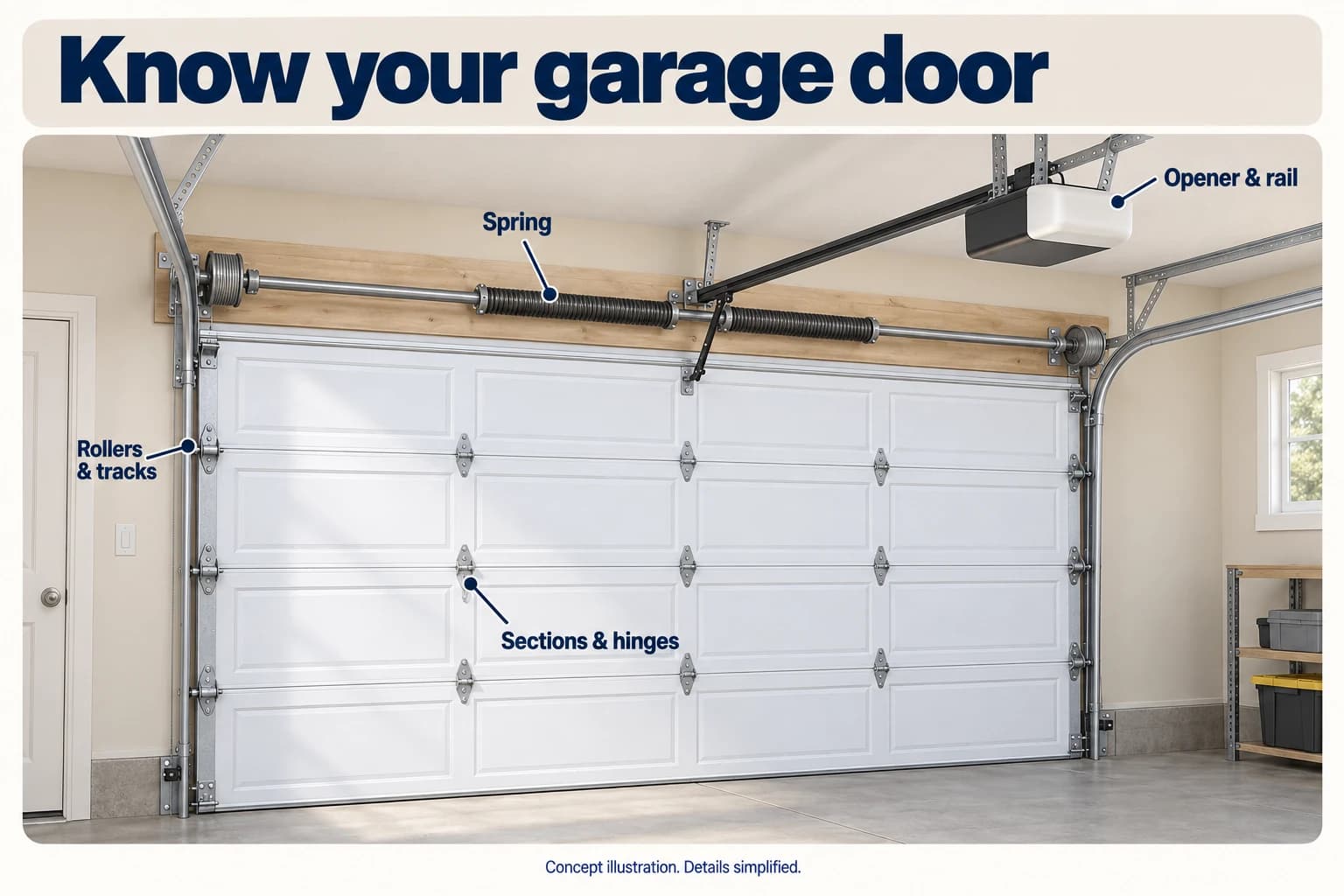






FIELD GUIDE 02 / Comfort & materials
There is more to a warm garage than a bigger R-value.
Understand garage door R-value, tested U-factor and weather seals, then use a quote checklist to compare insulation claims on the same basis.
Two garage door quotes can look easy to compare until one highlights a large R-value and the other lists a small U-factor. Both describe thermal performance, but they may measure different things. A better buying conversation begins with the exact door construction, the basis of each rating and how you use your garage.
Compare the same measurement. A section R-value and a tested whole-door U-factor tell different stories.
A CLOSER LOOK
Read the label, layer by layer
Choose a term to see what it can tell you—and what still needs checking.
01R-value: resistance through the section
A higher R-value indicates more thermal resistance on the same basis. A calculated door-section value describes the section construction, not the complete installed garage door.
References: DASMA TDS 163 — U-factor and R-value
02U-factor: heat transfer through the assembly
For comparable tested door assemblies, a lower U-factor indicates less heat transfer. Ask for the test basis and the exact door configuration. DASMA distinguishes this from a calculated section rating.
References: DASMA TDS 163 — U-factor and R-value
03Weather seals: the edge of the opening
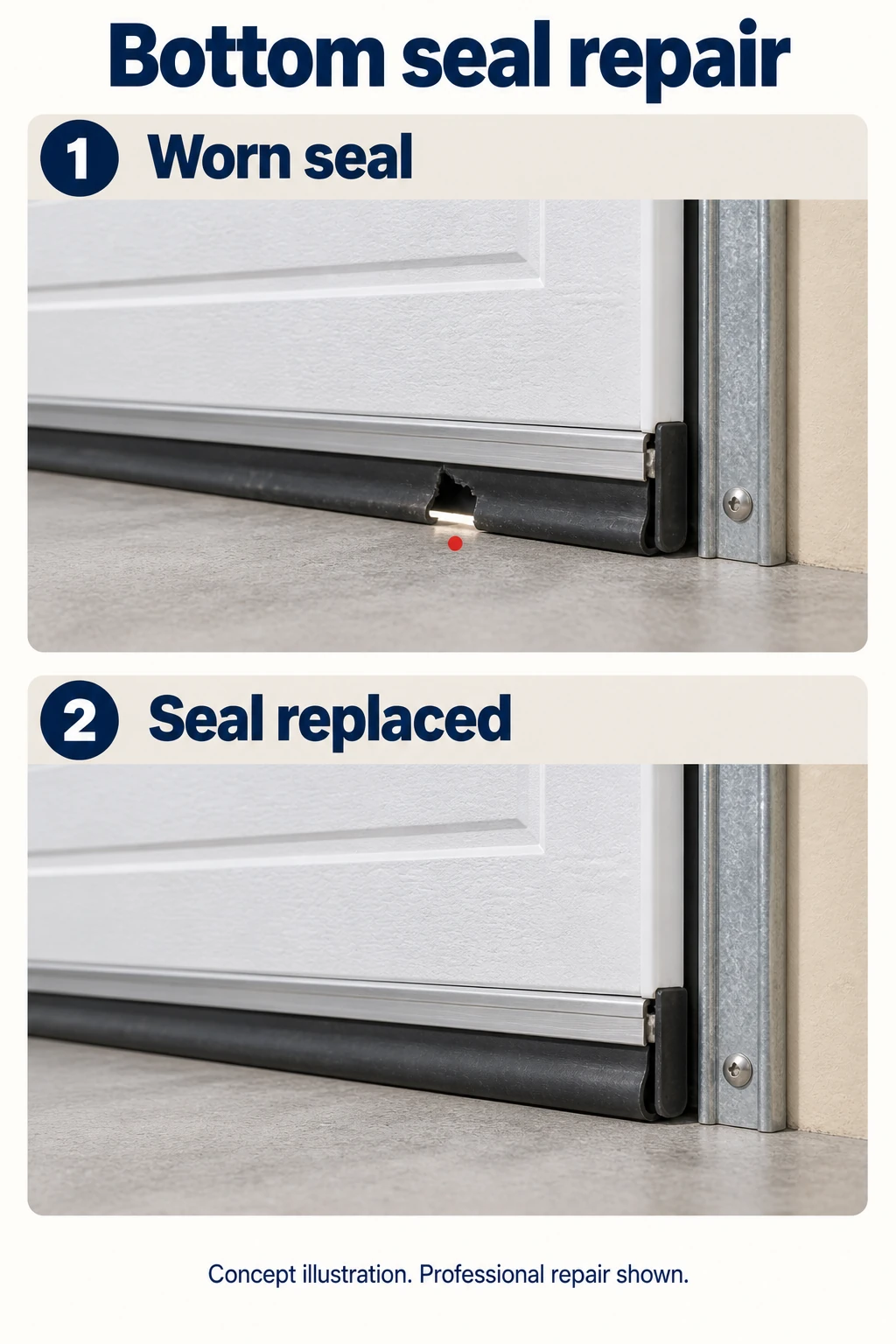
Insulation does not repair a gap beneath the door. Ask the installer to include perimeter and bottom-seal condition in the assessment, alongside the door construction.
References: Clopay — insulated and non-insulated doors
Why the numbers cannot simply be flipped
DASMA's TDS 163 distinguishes tested door-assembly U-factor from calculated door-section R-value. They are not reciprocal measurements of the same garage door construction. Dividing one by the advertised section R-value does not give you a verified whole-door U-factor.
A section calculation leaves out aspects of the assembled door, including its joints and attachments. That is why the basis of the number matters as much as the number itself.
References: DASMA TDS 163 — U-factor and R-value
Look inside the door, then around it
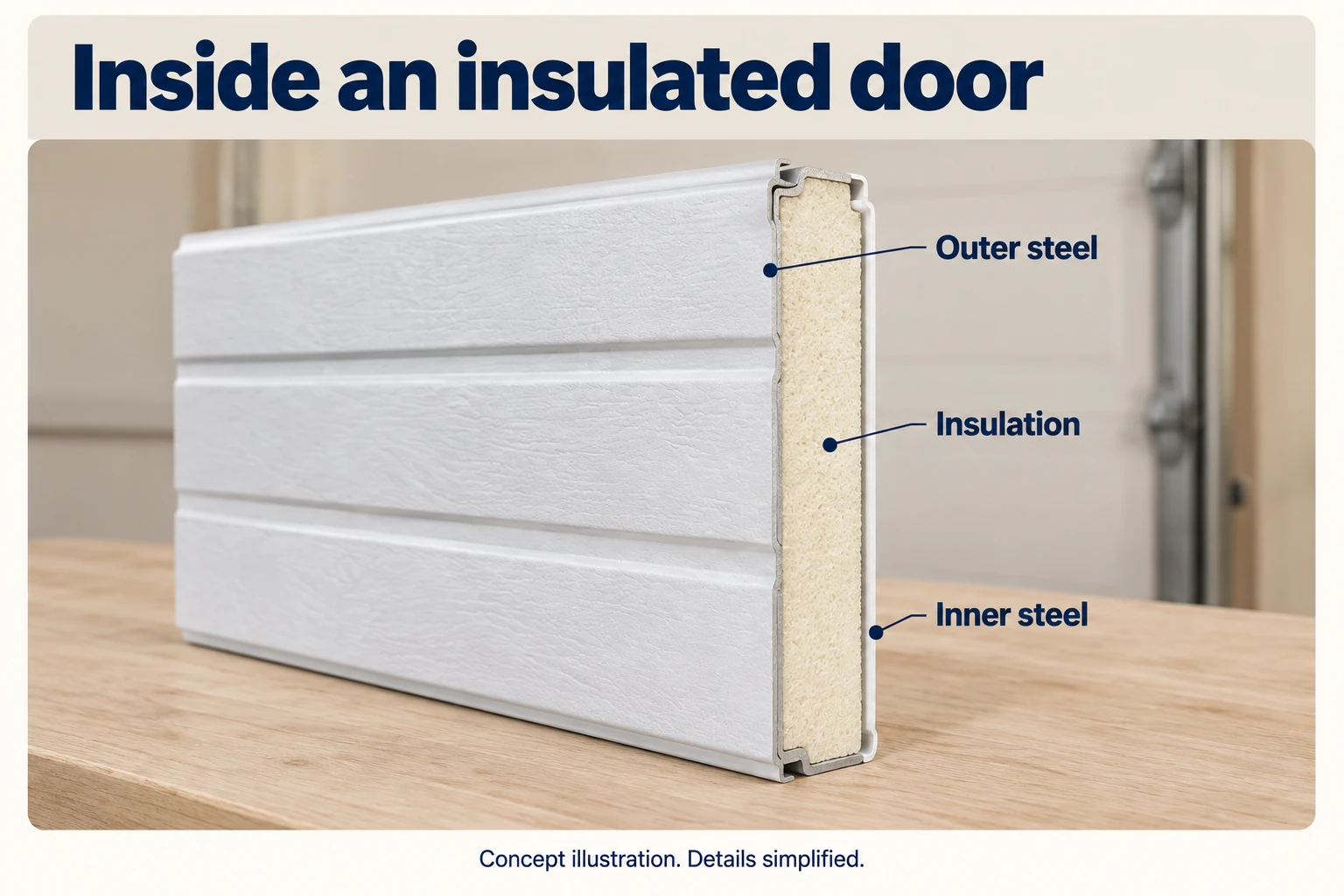
Insulated doors can use different materials and layer arrangements. The illustration shows one common concept: insulation between exterior and interior steel skins. Ask what is actually included in the quoted model; the word insulated does not identify a specific construction.
Also ask about the complete opening. Door fit and sealing belong in the discussion, especially when the complaint is a draft. An insulation rating alone is not a diagnosis of where cold air is entering.
References: Clopay — insulated and non-insulated doors · DASMA — myths about garage door thermal performance
Start with how the space is used
For your buying brief, describe whether the garage is attached or detached, whether you spend time in it, and whether there is occupied space beside or above it. Add the problem you want to solve: a draft, a cold work area, noise, or replacement of a damaged door.
These are questions for a site-specific assessment, not a promise that one door will deliver a particular room temperature or utility saving. Ask the supplier to separate verified product ratings from estimates about your home.
References: DASMA — myths about garage door thermal performance
TAKE THIS WITH YOU
Five questions to put on both quotes
- What is the exact model, size, glazing and layer construction?
- Is the advertised R-value for the door section?
- Is there a tested assembly U-factor, and what configuration does it cover?
- Which bottom and perimeter seals are included?
- What is verified product data, and what is an estimate about my garage?
Sources & illustration notes
Manufacturer and industry references checked September 9, 2026. The explanations and comparison checklists are editorial guidance, not a product test or an inspection of your door.
- DASMA TDS 163 — U-factor and R-value ↗
- Clopay — insulated and non-insulated doors ↗
- DASMA — myths about garage door thermal performance ↗
The original artwork was generated with AI for this guide. It illustrates concepts and omits or simplifies hardware. It is not a photograph of an Anderson installation or a model-specific service diagram.
KEEP EXPLORING